
A famous theorem of Leonard Euler states that given any two positions of a sphere with its center fixed, there exists a single rotation taking the sphere from one position to the other. That is, positing that two positions of a sphere have in common their center entails that they also have in common a diameter, and the object can be moved from one position to the other by rotating about that diameter.
The problem we explore here is how to compose two rotations. Given a sphere with its center fixed, rotating it about a diameter through an angle, then rotating it about another diameter through another angle, takes the sphere from its original position to a final position via an intermediate position.
We seek a purely geometric solution. To that end a possible analogy comes to mind. A translation of the plane can be represented by a directed line segment or arrow in the plane. Perhaps something similar can represent a rotation of the sphere, where great circles are analogous to straight lines. Focus on the plane for a moment. The translation arrow’s direction is the direction of the movement and its length tells how far to go.
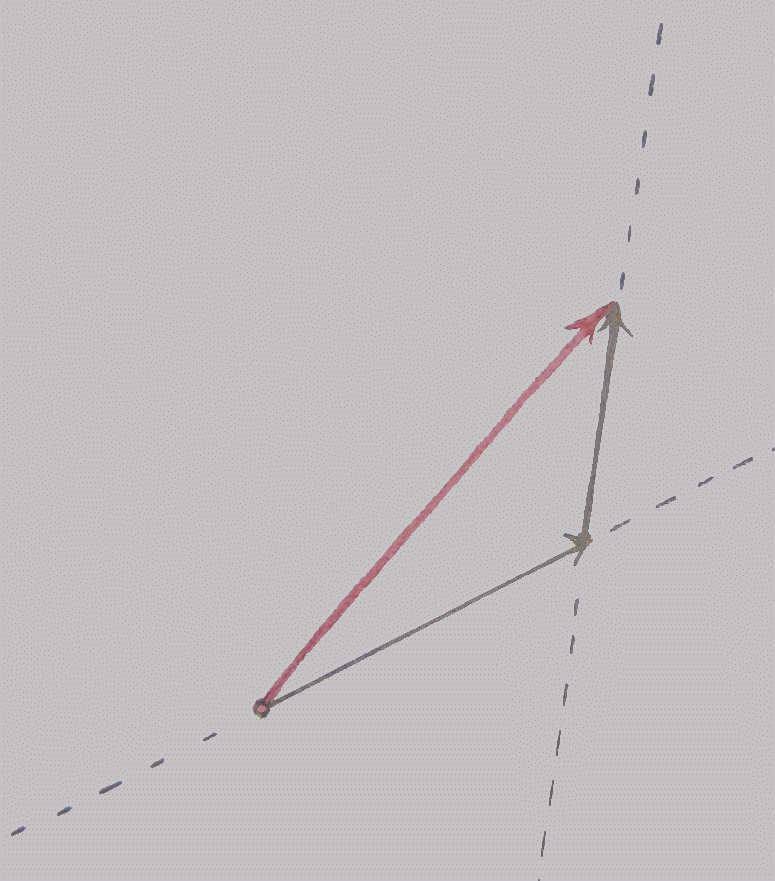
Given two translations, the result of performing first one then the other is equivalent to another, single, translation. We can determine its arrow by adding the arrows of the given translations using the following geometric construction. We consider only the case when the lines of the two arrows intersect. (Parallel lines have no analogue on the sphere – all great circles intersect.) Slide the first arrow along its line so its head meets the intersection of the two lines. Slide the second arrow so its tail meets the first arrow’s head. Then the arrow from the first’s tail to the second’s head is the sum of the two given arrows.

This suggests trying to do something similar with rotations of the sphere. We shall represent a rotation by a curved arrow, that is, a directed arc of a great circle, on the unit sphere, so its arc length measures an angle. Such a curved arrow represents rotating about the center of the sphere in the direction of the arrow through an angle indicated by its length.
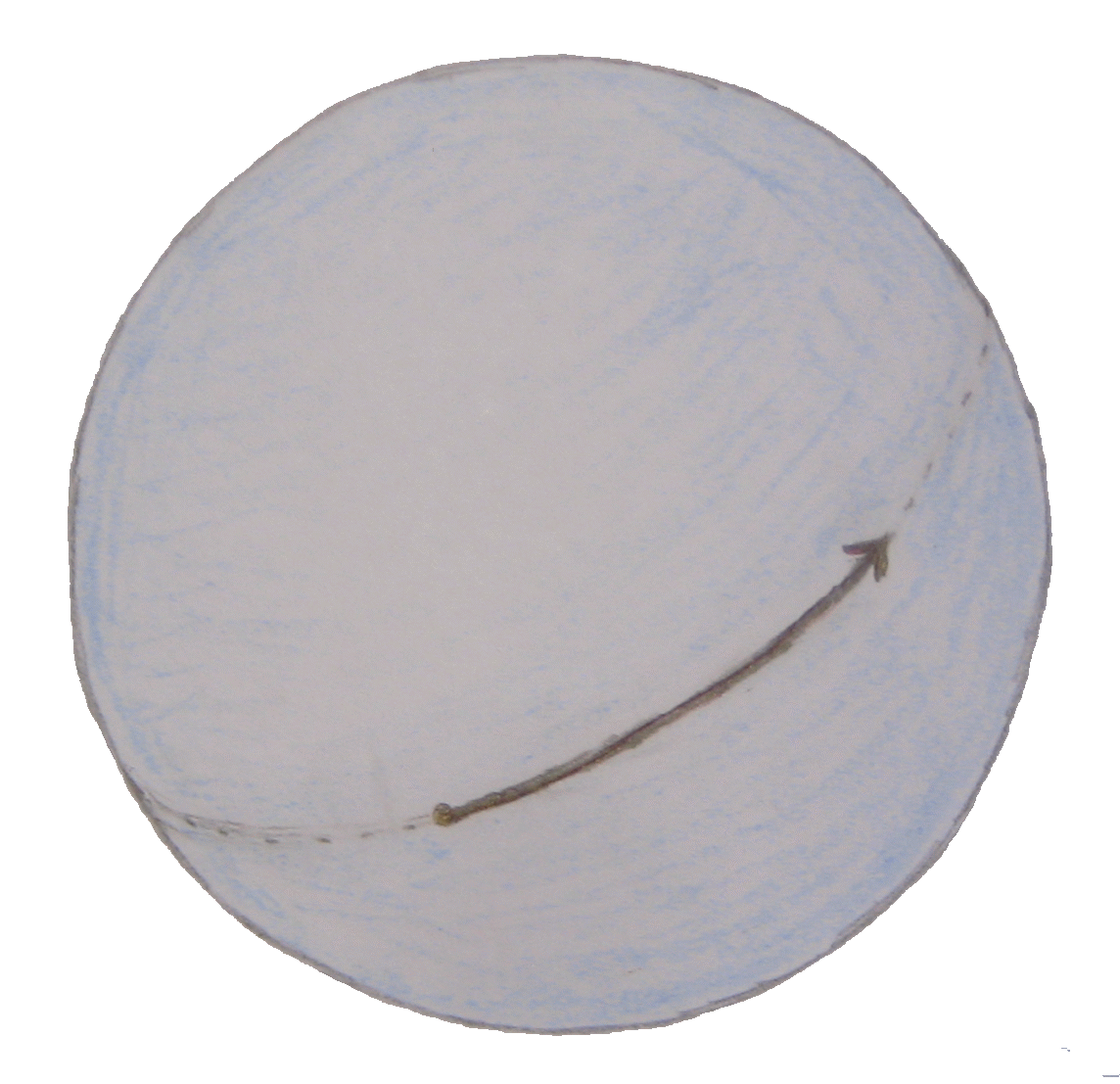
The plane of the curved arrow’s great circle is perpendicular to the axis of rotation. (The axis is considered as a full line. No right hand rule is necessary to determine the rotation’s direction.)
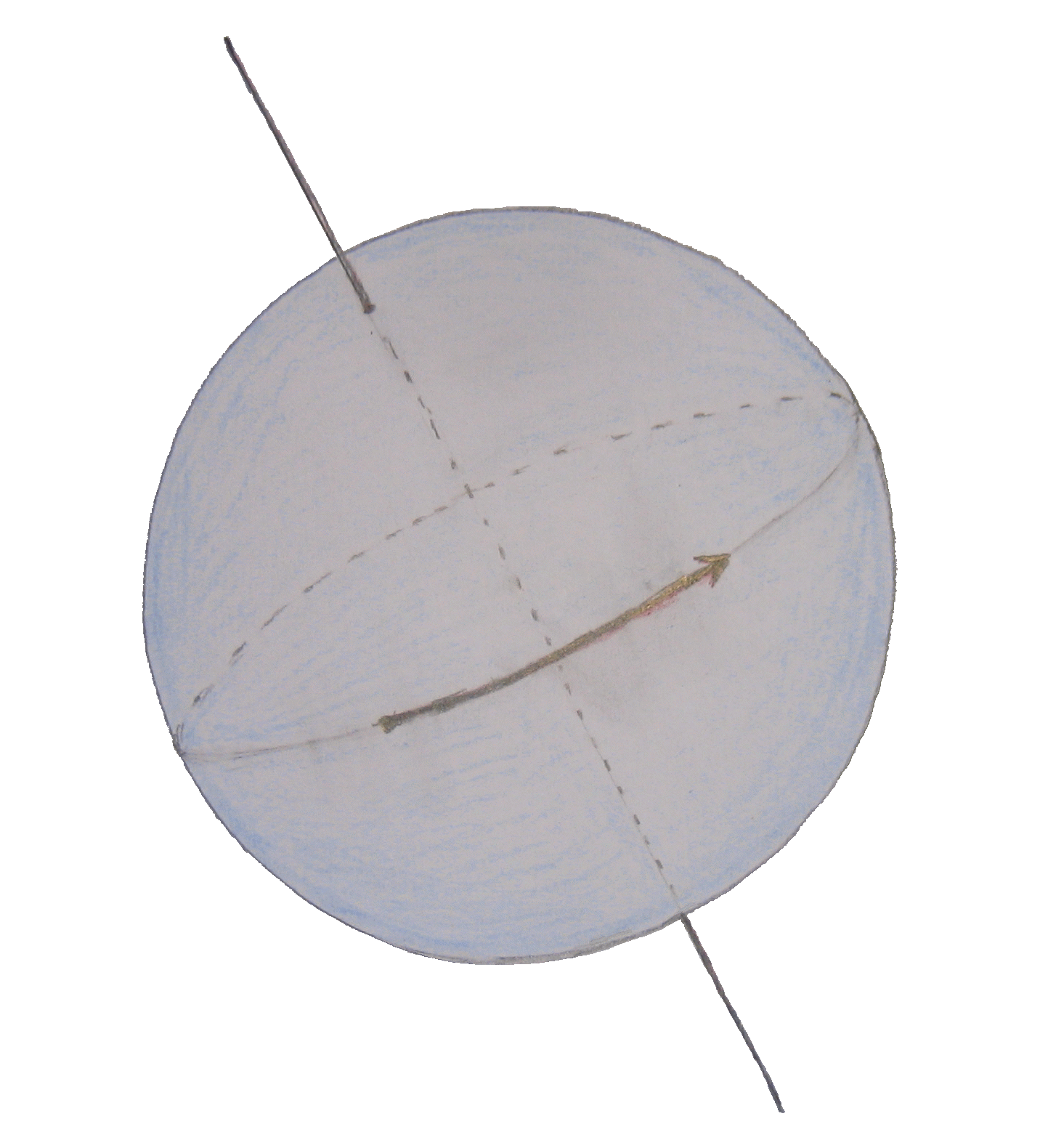
From the point of view of the sphere the curved arrow is straight: its lateral curvature is zero.
We can slide a curved arrow anywhere along its great circle, its arc length remaining constant, and it will specify the same rotation. In mathematical jargon, one curved arrow determines an “equivalence class” of curved arrows on its great circle. We call such an equivalence class a Turn. At times we may just refer to a curved arrow and leave the equivalence class it represents, the Turn, understood. We call the unit sphere with its freight of potential curved arrows, the Turn Sphere.
Given any rotation there is an ordered pairs of points (the head and tail of a curved arrow) that represents it.. At first glance this space of Turns has four dimensions (two times two) but the fact that the pair of points can slide along a great circle (one dimension) and represent the same rotation reduces that by one. Thus “rotation space” has three dimensions. [2]
On the Turn Sphere any curved arrow of zero length – an overlapping pair of points, anywhere on the sphere – represents the null rotation. All such degenerate arrows are equivalent; there is only one null Turn. [3]
The plane – sphere / translation – rotation analogy suggests that we might be able to find the result of two rotations in space, one after the other, by adding their corresponding Turns on the Turn Sphere, head-to-tail, with sliding along a line changed to sliding along a great circle.
We said that a Turn or curved arrow represents the act of rotating through an angle indicated by its length. Tthe word “indicated” was intentionally left undefined. Suppose we take it to mean that the angle of rotation is the length of the curved arrow, understood as a radian measure. To see if this works, consider a simple example. Suppose we make two rotations each through 180° – a flip – about two perpendicular axes one after the other. A moment’s thought shows that the end result is the same as a flip about the axis perpendicular to the given axes. Yet the two curved arrows corresponding to the flips would be great-semicircles – if the arc length were the angle of rotation – and then their sum per the head-to-tail construction would be a curved arrow of zero length, a null Turn, that is, no rotation at all – which is about as wrong as it could be.
In fact, this construction usually fails to give the correct answer. It is correct only when the two arrows lie on the same great circle. Somehow the curvature of the sphere breaks what works in the plane.
However a simple modification or reinterpretation of our definition of a curved arrow / Turn will exactly compensate for the curvature of the Turn sphere, to wit: always make its arc length half the rotation angle. When we come to follow an arrow’s instructions, we double its numerical length to obtain how much to rotate but when adding them head-to-tail we use them as they are, with the half angle. With this modification it happens that the head-to-tail construction will give the correct answer in every situation.
This amazing and little known theorem is due to Lawrence C. Biedenharn & James D. Louck. It can be found in “The Theory of Turns Adapted from Hamilton” which is chapter 4 of their Angular Momentum in Quantum Physics (1985), a volume of Encyclopedia of Mathematics and its Applications edited by G.-C. Rota.
Applied to our example of the two flips, the given curved arrows are now each 90° (π/2 radians) and adding them head-to-tail yields an arrow of 90° perpendicular to the given arrows – the correct result.
The theorem can be proven using the idea of reflection and two lemmas of solid geometry.
A reflection, like a rotation, takes objects in space to objects in space. It is determined by one plane and defined as follows. Given a plane, the reflection of a point is the point on the other side of the plane directly opposite, that is, the line between the given point and its reflection is perpendicular to the plane, and the two points are the same distance from the plane. A reflection changes an object into its mirror image; points on the plane remain where they are.
Lemma #1 Given two planes A and B, intersecting in the line L, the result of reflecting first through A and then through B is the same as rotating about L in the direction A to B, through twice the dihedral angle between them.
In other words, given two intersecting planes, if we first reflect an object in space “through” one plane and then the other, the resulting position of the object will be the same as if it had been rotated about the line common to the two planes, the angle of rotation being exactly twice the dihedral angle between the planes in the direction from the plane used first to the one used second.
This lemma, though about solid geometry, in essence is about plane geometry. Given an arbitrary point to be moved by the rotation, view the two reflecting planes end on, or what amounts to the same thing, consider the plane slice perpendicular to their intersection and through the given point. In that slice we have two intersecting lines – the angle between them is the dihedral angle – and the arbitrary point. The lemma says that reflecting that point through one line and then the other in effect rotates the point by twice the angle between the lines.
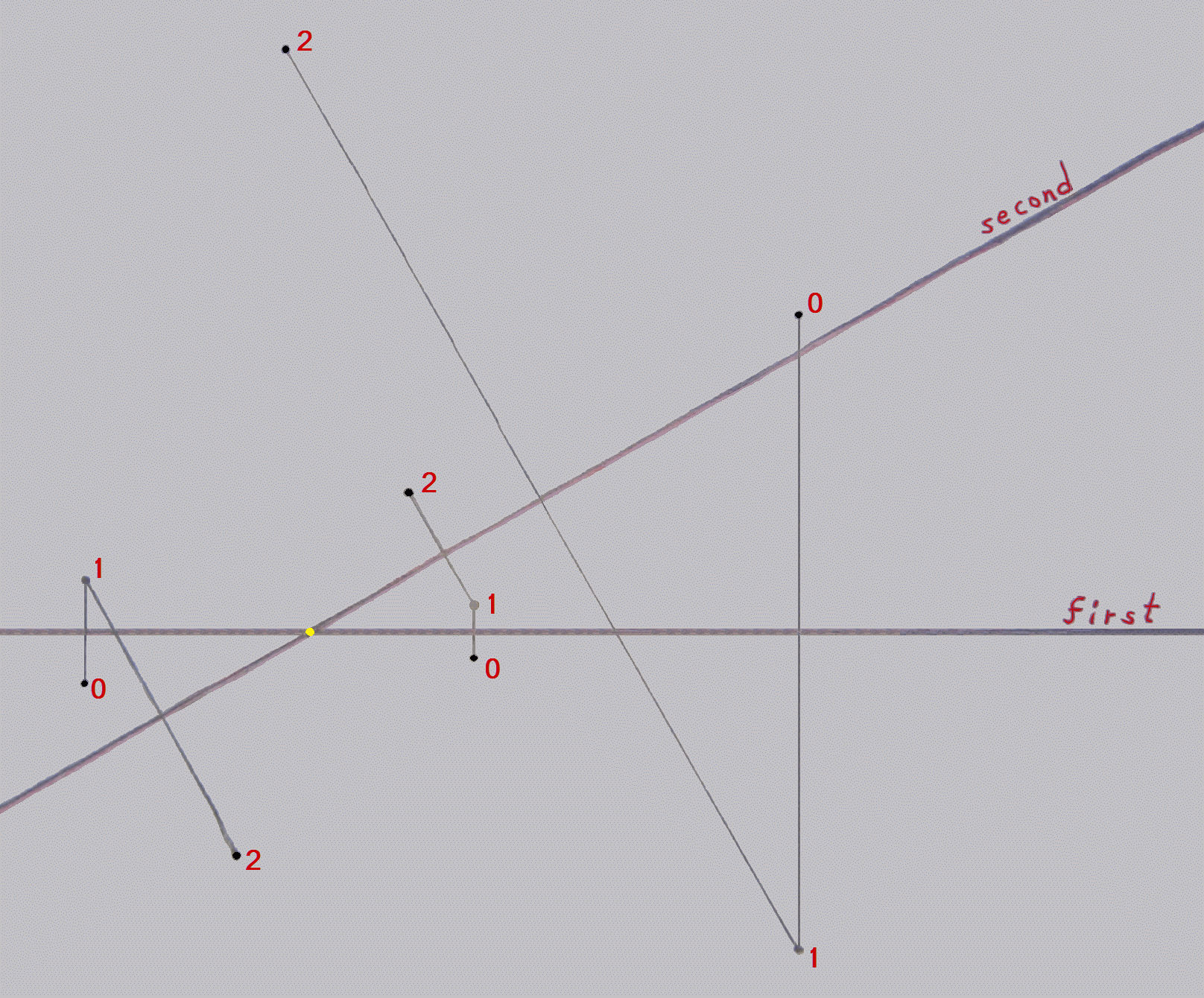
The proof is based on the fact that the mirror image created by a reflection is undistorted; reflecting is a rigid transformation. The mirror image is, in every respect except “handedness” and position, just like the original. Consequently, if you expand a vector, its reflection – its mirror image – expands by the same amount. And if you add two vectors, their reflections add likewise, that is, the reflection of “their sum on the original side” is the sum of their reflections on the other side. These two properties can be written algebraically (for the moment, instead of using juxtaposition for multiplication we use a dot):
In what follows we assume the reader knows the formula for rotating a point about the origin:
Now suppose we are given two lines through the origin that define the first and second reflections. Choose an x, y coordinate system so that the intersection of the lines is the origin and the first line is the x-axis. Let θ be the angle from the first line (the x-axis) to the second line. Let (x0, y0) be a given point. Then the coordinates of its reflection in the first line are
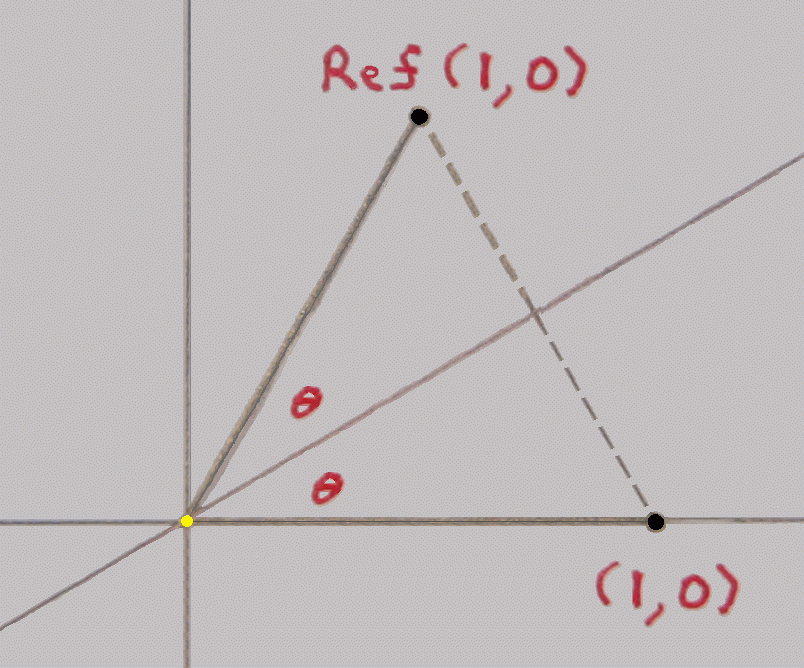
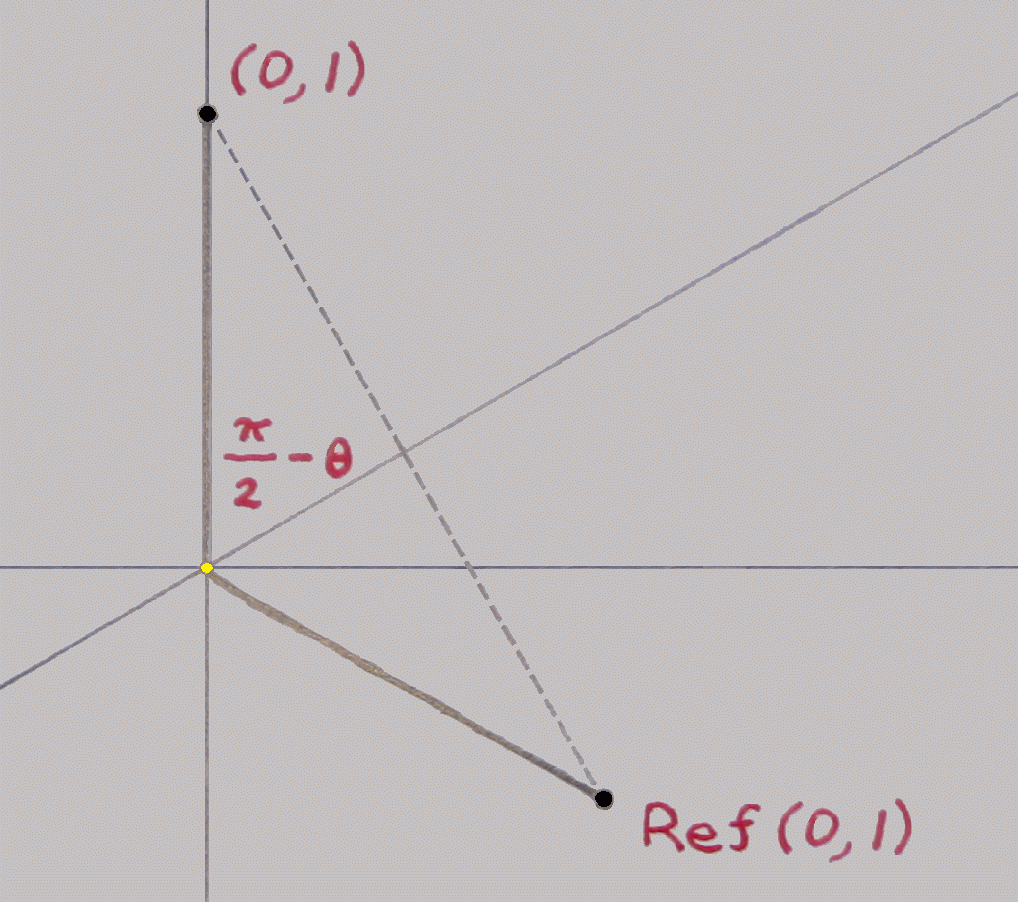
By the way, there is a curious contrast between a reflection and a rotation. A reflection is a discontinuous operation: it is done entire or not at all. A rotation on the other hand can be thought of as the culmination of a continuum of infinitesimal rotations. Despite that, the final result of a rotation is the same as the final result of two reflections.
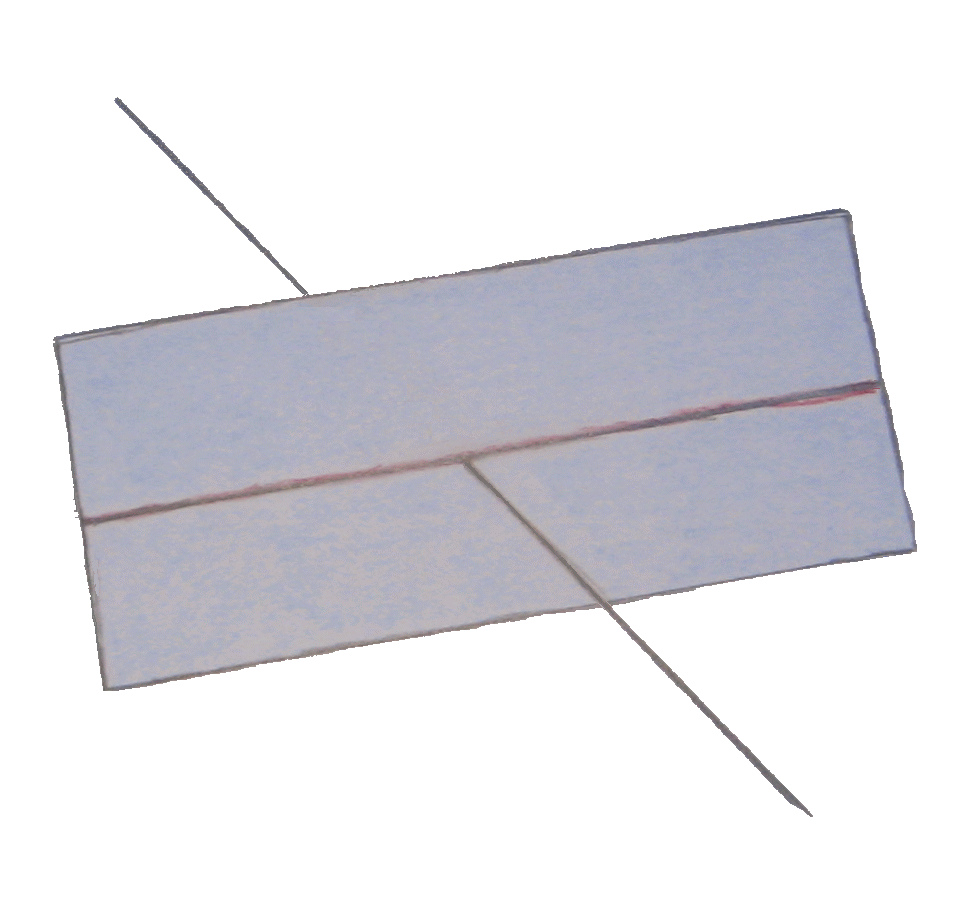
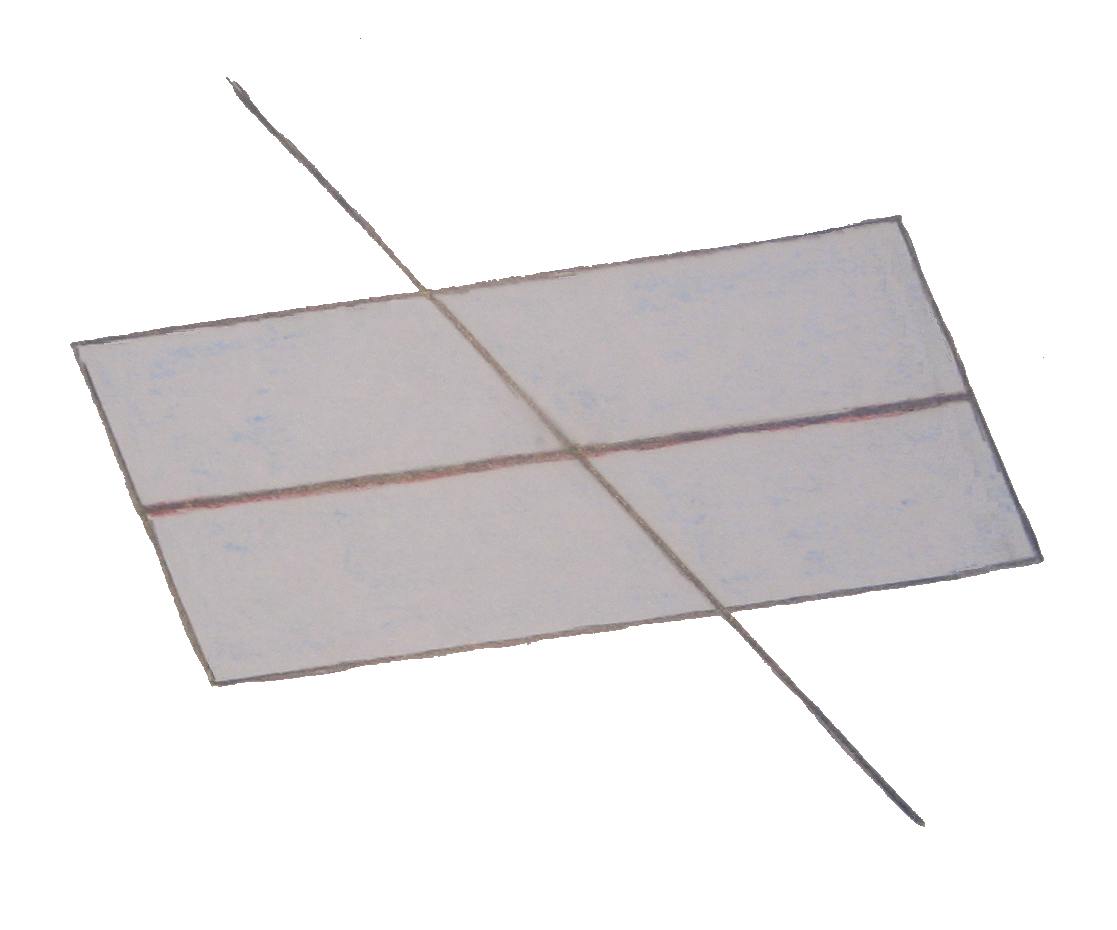
Lemma #2 Given a line L and a plane containing it, and a second line M intersecting L, the plane can be rotated about L so that it contains M.
This is obvious; rotate the plane to the plane determined by the intersecting lines.
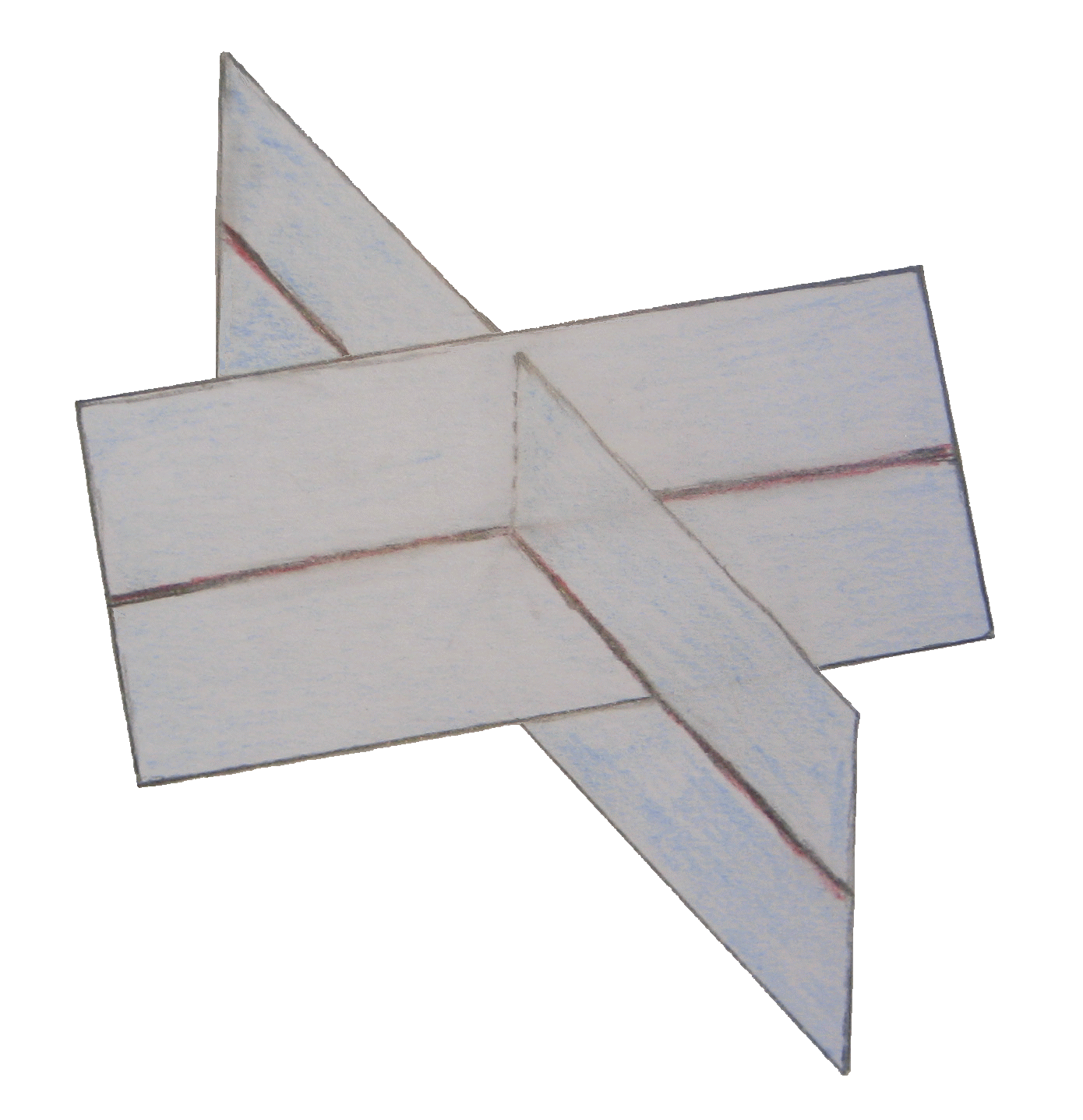
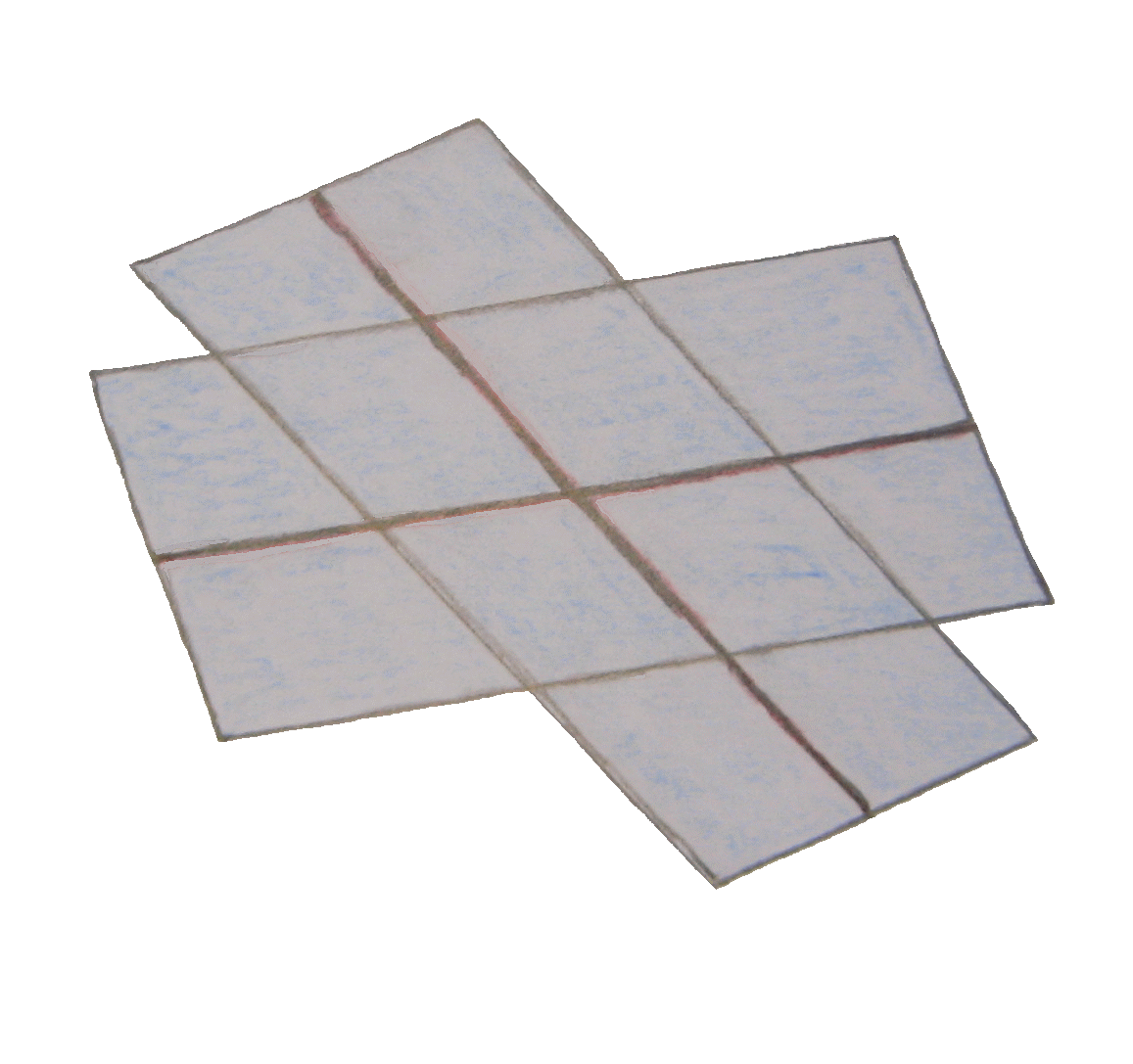
Now we are in position to prove the head-to-tail construction for composing rotations.
By Lemma #1 a rotation is equivalent to two reflections about an ordered pair of planes through the rotation axis, where the angle between the planes is exactly half the angle of rotation. We say that the ordered pair of planes represents the rotation.
Call such an ordered pair a paddelrad (German for “paddlewheel”) and each plane a paddel.
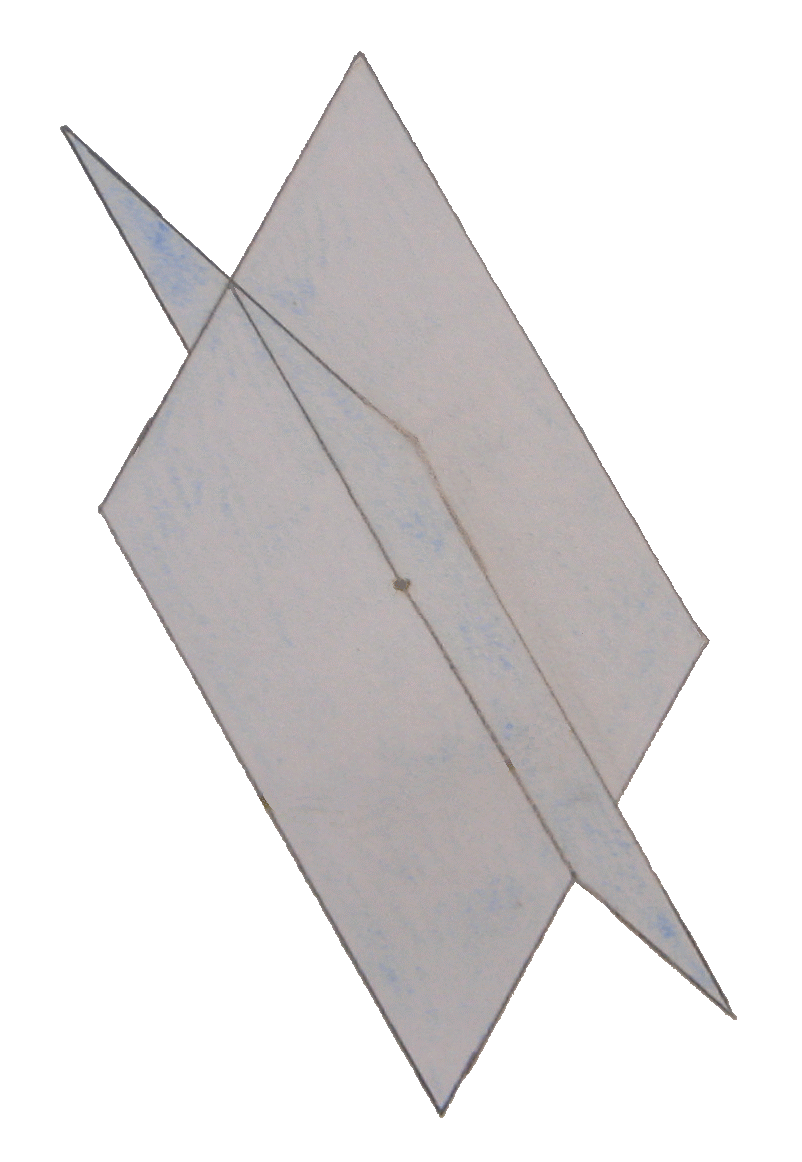
A paddelrad is equivalent to a curved arrow, with the first plane corresponding to the tail and the second to the head,
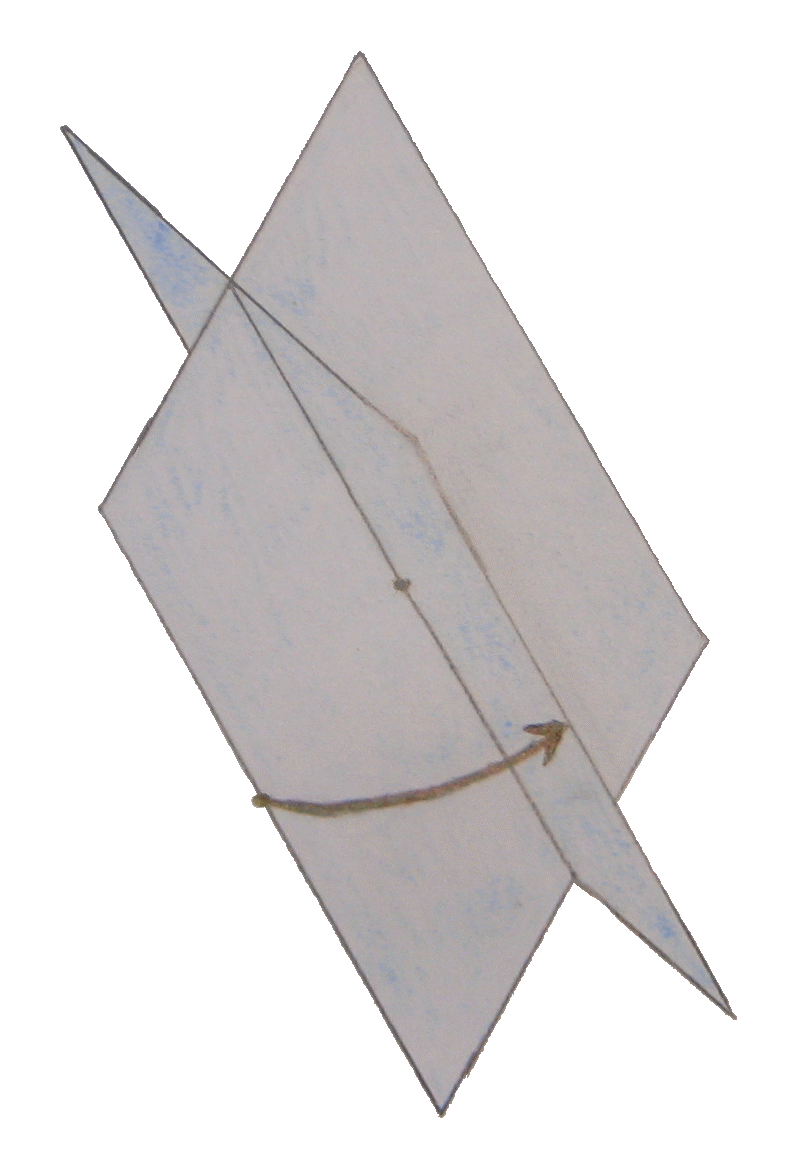
Euler’s theorem says that given two orientations there exists a rotation taking one to the other. Thus the change in orientation after two rotations is the same as the change made by a some single rotation. Paddelrads enable us to find that single rotation, as follows.
Consider two rotations (as usual about the same point) and let A and B be two paddelrads representing them per Lemma #1. Call their ordered planes Atail Ahead and Btail Bhead respectively, taking the names from the corresponding curved arrow. Consider the plane common to the axis of A and the axis of B and call it P. By Lemma #2, if we choose a paddel from A and one from B, their respective paddelrads can be rotated so that the chosen paddels coincide, specifically in the plane determined by the paddelrads’ axes, P. So rotate A on its axis so that Ahead lies on P and rotate B on its axis so that Btail lies on P as well. Thus the four planes
Atail Ahead Btail Bhead
become
Atail P P Bhead
Now imagine these reflections being done in their given order. The two reflections through plane P in the middle cancel, and we are left with the single paddelrad
Atail Bhead
Tom Verhoeff puts it this way in “Composing Rotations via Hamilton Turns” (after some abridgement and minor copyediting):
The way of adding paddelrads in the proof is identical to the head-to-tail way of adding the associated curved arrows.
The proof shows that given two rotations one followed by the other, there exists a single rotation that has the same effect, which is a special case of Euler’s theorem.
When defining the curved arrow, only a rotation angle factor of one-half will make head-to-tail addition work. The fact that in all cases that particular factor exactly compensates for the curvature of the sphere is what is so amazing.
Unlike with translations in the plane, the head-to-tail method of adding works only with two Turns at a time. The restriction on sliding a curved arrow only along its great circle prevents, in general, “daisy-chaining,” the construction. Codman’s Paradox provides an example of three Turns that cannot be slid head-to-tail simultaneously. Most any three Turns would do for such an example but these particular three are easy to compose and the result is the basis of a good parlor trick.
Ernest Amory Codman, a Boston surgeon (and very interesting man, look him up), described the following in a medical article of 1934 about the muscles of the shoulder.
Start with your right arm hanging by your side with the thumb of the hand pointing forward. With your shoulder as the pivot, lift your arm sideways straight out so it points to the right. Then swing your arm forward horizontally so it points ahead. Finally, swing your arm down to your side where it started. But it is not quite where it started. Your thumb is now pointing toward you, that is, to the left instead of forward as at the start. The end result is that your arm rotated 90° within itself.
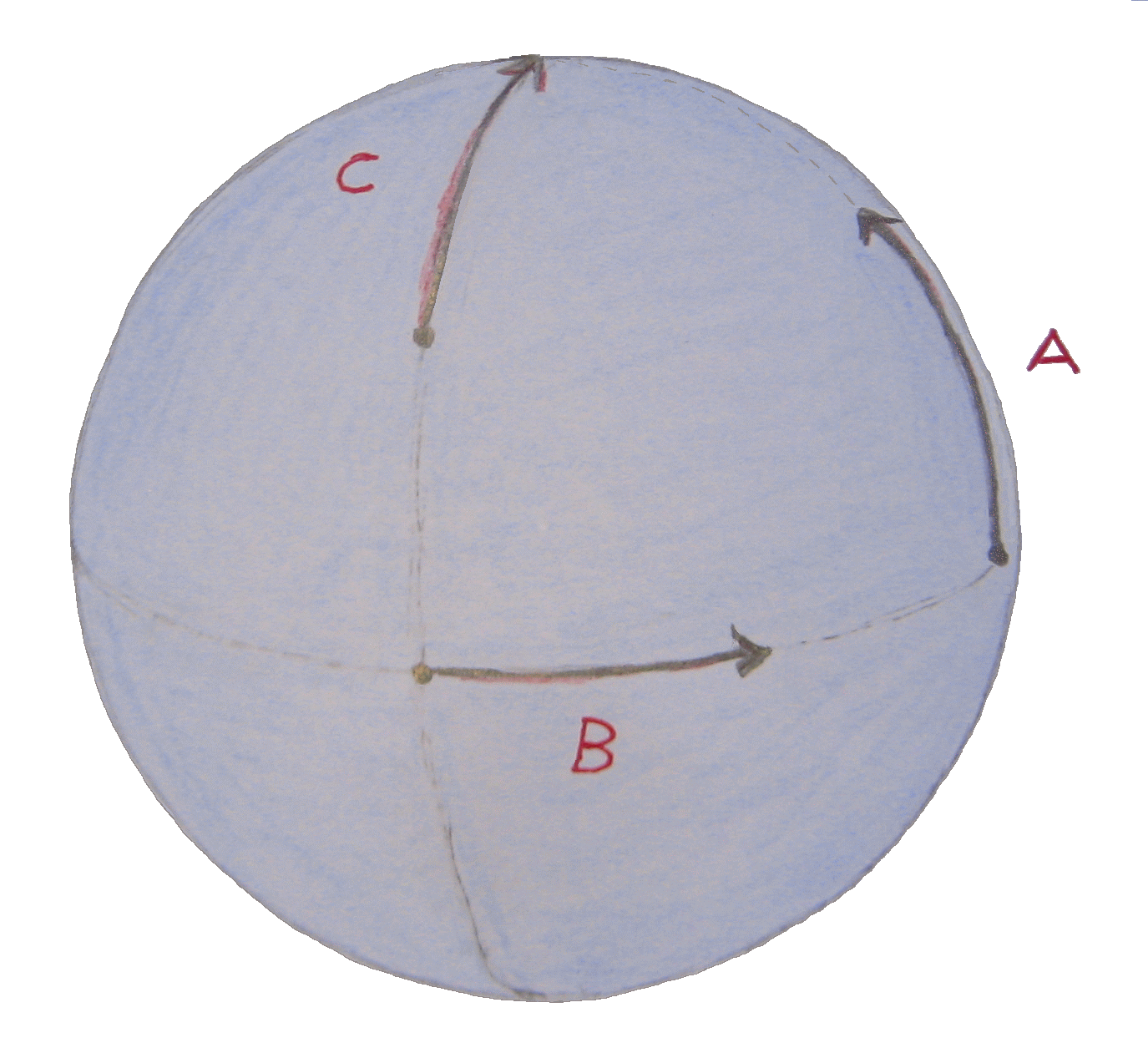
The three rotations about the shoulder were 90° each, around three perpendicular axes: the first about the horizontal backward axis, the second about the vertical axis, the third about the horizontal leftward axis. That resulted in a 90° rotation about the vertical axis – a rotation about the long axis of your arm despite your never seeming to have done it.
Here are three representative curved arrows for the three rotations.
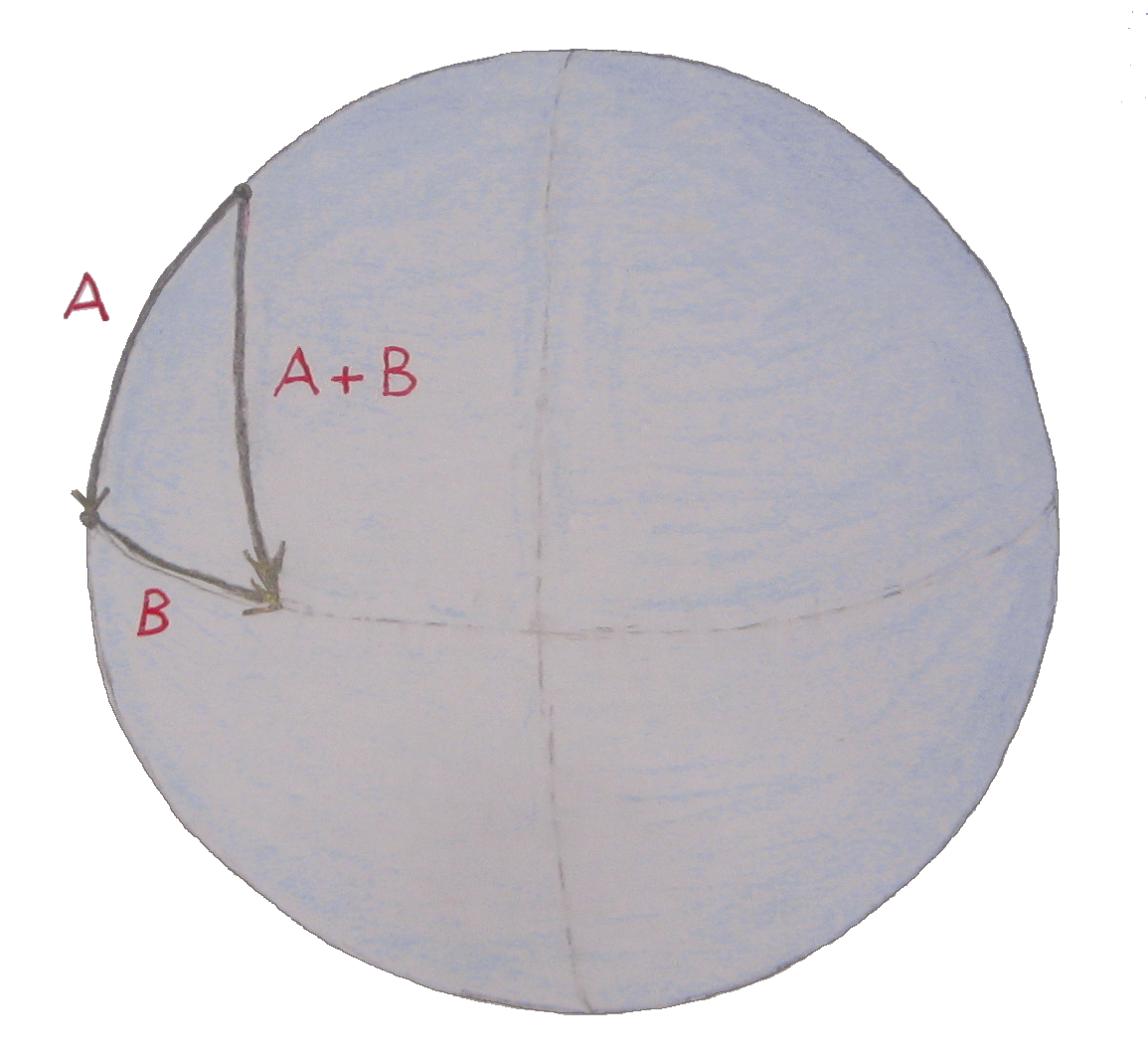
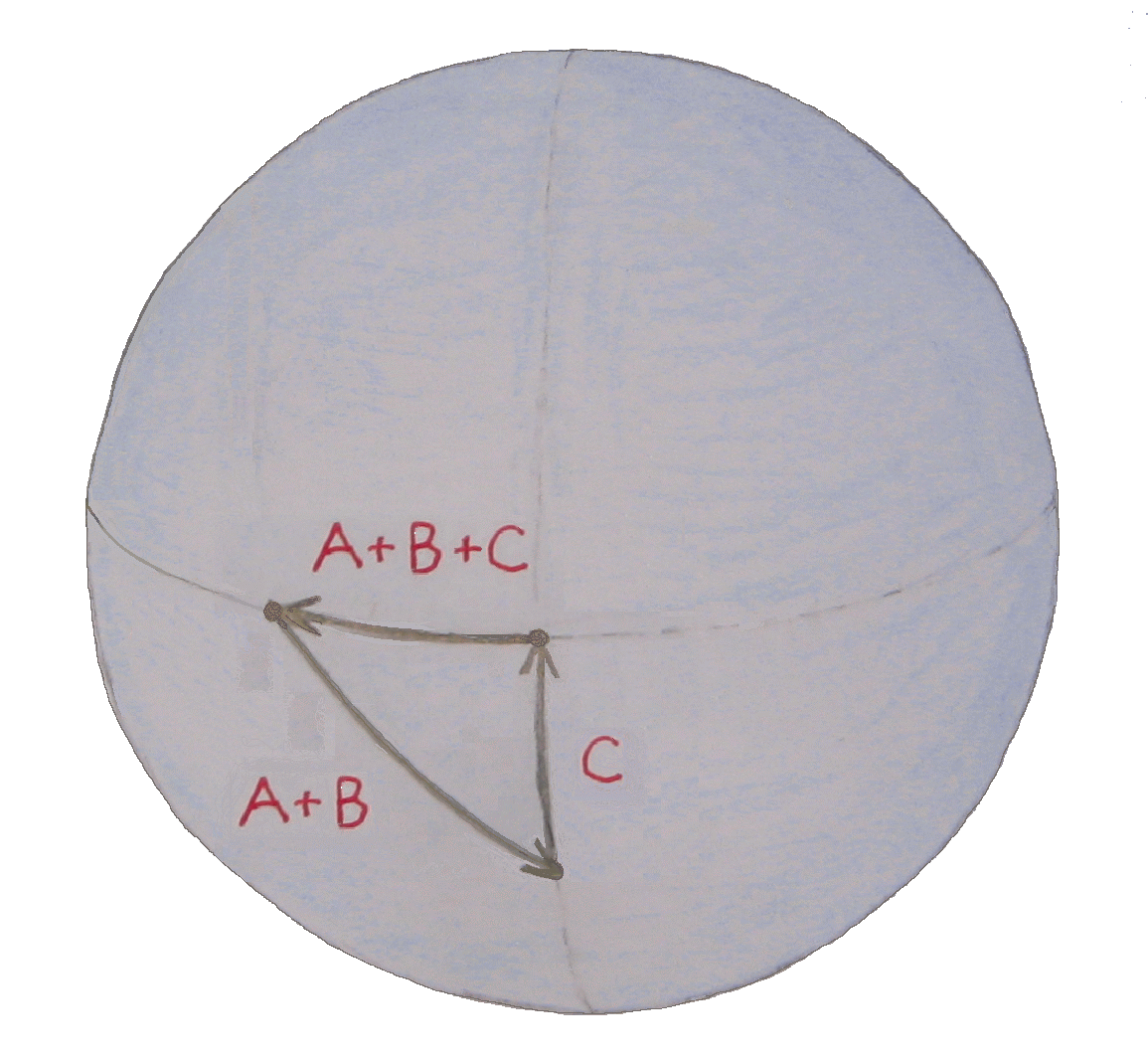
Rotation is not a commutative operation. Codman’s three rotations can be used as an example. As before, start with your right arm hanging by your side, thumb pointing forward. Then do the three 90° rotations of the arm in reverse order: up, right, down (C + B + A). Your thumb ends, instead of pointing inward, pointing outward.
Lemma #1 applied to reflections in two planes. A similar theorem holds applied to flips about two lines, a flip being a rotation of 180° (π radians). [4] In a way flipping is simpler than reflecting in that flipping preserves orientation.
Lemma #3 Given two lines L and M, intersecting at the point P, the result of flipping first about L and then about M is the same as rotating about their common perpendicular line through P in the direction L to M, through twice the angle between them.
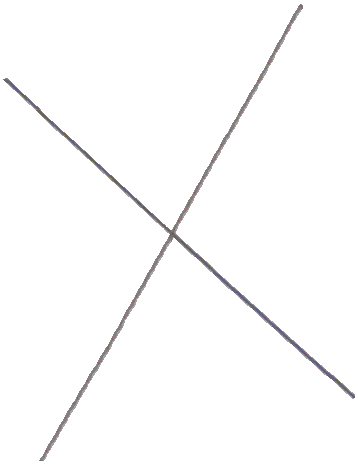
If this statement is true then rotating the two lines L and M about their common perpendicular line (keeping the angle between them fixed) has no effect on the resultant rotation. We call the two lines a propeller, analogous to the paddelrad of Lemma #1, and each line a blade. The plane of a propeller is perpendicular to the line of the corresponding paddelrad. The planes of a paddelrad are perpendicular to the plane of the corresponding propeller.
Lemma #2, used in head-to-tail paddelrad composition, showed that given two intersecting lines each with a plane through it, the planes can be rotated about their respective lines so that they coincide. The analogue for flips is:
Lemma #4 Given two intersecting planes each containing a line through a point on the intersection, the lines can be rotated about the point in their respective planes so that they coincide.
This is obvious; rotate each line to the intersection of the two planes.
We can again prove the head-to-tail construction for composing rotations using propellers instead of paddelrads. The proof goes just as before except that the planes of paddelrads are changed to the lines of propellers.
We proved Lemma #3 about propellers with the aid of Lemma #1 about paddelrads. The later proof involved analytic geometry in the plane. We shall now prove Lemma #3 directly so it will so to speak stand on its own legs, but analytic geometry in space will be necessary.
We will use the following fact: Given any rotation R and flip F,